

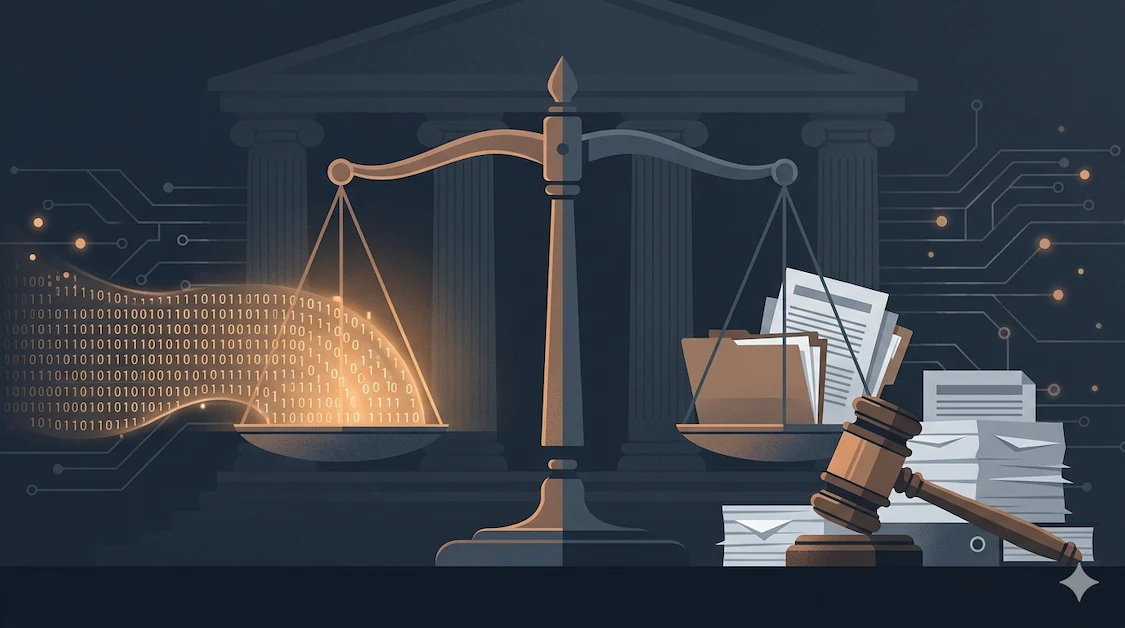
A 2026 opinion and news analysis of AI governance and data ownership debates — the IP lawsuits, regulatory pressure, and unresolved question of who owns AI-generated content.
Table of Contents
AI Governance and Data Ownership Debates: Who Owns AI Content?

A judge just ordered OpenAI to hand over 88 million chat logs. Disney is suing an AI image generator for allegedly cloning its characters. CNN is suing Perplexity for scraping its journalism without paying for it. And the U.S. Supreme Court just refused to say whether an AI system can legally “own” anything it creates at all.
If it feels like the AI governance and data ownership debates are escalating by the week, that’s because they are. We’re past the point of polite policy panels. This is now a full-blown legal and regulatory reckoning over who controls the data feeding these models, who’s liable when that data was never licensed in the first place, and who — if anyone — owns what comes out the other end.
This piece breaks down where the AI governance and data ownership debates actually stand right now: the IP disputes setting precedent, the regulatory pressure building on both sides of the Atlantic, and the messy, still-unresolved answer to who owns AI-generated content. Along the way, I’ll flag where I think the current approach is failing creators, and where it’s arguably failing AI companies too.
What’s Fueling the AI Governance and Data Ownership Debates Right Now

Three forces are colliding at once, and that collision is what’s making the AI governance and data ownership debates feel so urgent in 2026.
First, the sheer scale of generative AI adoption has outpaced the legal frameworks meant to govern it. Second, courts are finally issuing real rulings instead of procedural punts, which means the abstract debate is turning into binding precedent. Third, regulators in the EU, US, and elsewhere are tightening enforcement timelines just as the litigation wave crests.
Put plainly: this is no longer a theoretical fight about fairness in AI. It’s a fight over billions of dollars, and increasingly, over who gets to claim authorship in an AI-assisted world.
Why “Move Fast and License Later” Stopped Working
For years, AI labs trained models first and dealt with licensing questions later, if at all. That approach is now colliding with courts that are willing to treat unlicensed training data as straightforward piracy rather than an abstract gray area. The financial consequences of that shift are exactly why the AI governance and data ownership debates have stopped being a niche legal topic and started showing up in earnings calls.
The IP Disputes Reshaping Who Owns AI-Generated Content

Few areas illustrate the AI governance and data ownership debates better than the wave of intellectual property lawsuits now moving through U.S. courts. As of mid-2026, more than 70 AI copyright cases are active or recently resolved, and a handful of them are setting the tone for everything else.
The biggest one so far: Anthropic agreed to pay $1.5 billion to settle a class-action lawsuit (Bartz v. Anthropic) brought by authors who alleged the company trained its models on pirated books. The settlement covers roughly 482,000 works at an implied rate of about $3,113 per book, and final court approval was granted in May 2026. Crucially, the underlying ruling that shaped the settlement distinguished between two separate questions: training an AI model on copyrighted books can qualify as fair use, but acquiring those books through piracy in the first place does not get a pass just because the end use was “transformative.”
That distinction matters enormously for the broader IP disputes still playing out. The New York Times’ lawsuit against OpenAI and Microsoft, filed back in late 2023, is still working its way through the courts and is widely expected to be a bellwether for how “transformative use” gets defined for general-purpose AI. Disney, Lucasfilm, Marvel, and other studios have sued Midjourney, alleging its image generator was trained on their copyrighted characters and continues to output infringing derivatives. And in a sign that no industry is sitting this one out, CNN recently sued Perplexity, accusing the AI search company of using its journalism without permission or compensation — the first such suit by a TV network, following similar actions by print publishers.
Then there’s Thomson Reuters v. Ross Intelligence, which doesn’t even involve a generative AI model, just an AI-powered legal research tool trained on Westlaw’s headnotes. A court ruled that use was not fair use, and that case is now headed to the Third Circuit for the first appellate ruling on AI training and fair use anywhere in the country. Whatever that court decides will ripple through every other AI governance and data ownership debate currently sitting in a lower court.
The Music Industry Joins the AI Governance and Data Ownership Debates
Publishing and visual media aren’t the only industries treating the Bartz settlement as a playbook. A group of major music publishers filed a $3.1 billion lawsuit against Anthropic in 2026, using the same core piracy theory: that copyrighted works were downloaded from unauthorized sources before any training occurred. Around the same time, the Supreme Court was weighing a separate but related question in a case between music publishers and an internet service provider over how aggressively ISPs must police piracy on their networks. Neither case is about AI-generated music directly, but both feed the same AI governance and data ownership debates, because both turn on a question regulators and courts keep circling back to: who’s responsible when copyrighted material moves through a system without permission, even if no human at the company ever looked at it.
The “Who Owns the Output” Question Nobody Has Fully Answered
Underneath all of these lawsuits sits a quieter but equally important question: once an AI model generates something new, who owns that? The U.S. Supreme Court had a chance to weigh in directly and declined to take it.
In March 2026, the Court denied certiorari in Thaler v. Perlmutter, leaving in place a string of lower-court rulings that an AI system cannot be listed as the legal author of a copyrighted work. Stephen Thaler had argued his AI system, DABUS, autonomously created a piece of visual art and should be recognized as its author. The Copyright Office and federal courts disagreed, holding that human authorship remains a bedrock requirement of copyright law. Importantly, this doesn’t mean AI-assisted work can never be copyrighted — it means a human has to meaningfully contribute to it. Thaler’s case failed largely because he explicitly disclaimed any human creative input at all.
So for now, the practical answer to “who owns AI-generated content” is: a human does, but only if a human did enough of the creative work to count, and nobody has drawn a precise line for how much is “enough.”
Regulatory Pressure Is Reshaping AI Governance and Data Ownership Debates From the Outside In
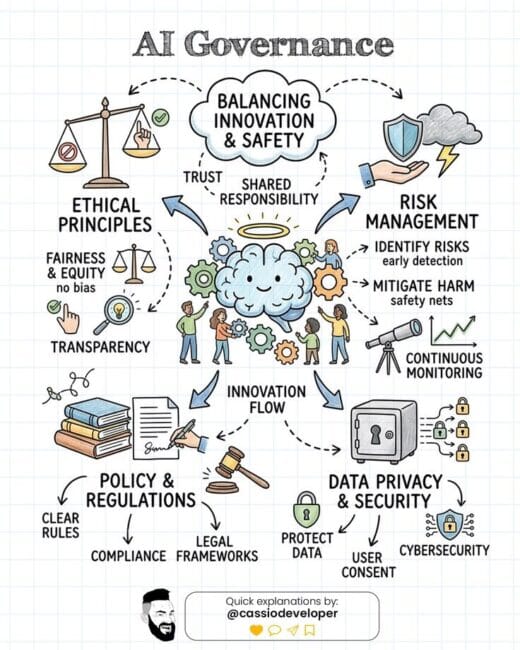
While courts sort out liability case by case, regulators are building rules meant to prevent the next round of disputes before they start — and that regulatory pressure is arguably moving faster than the litigation itself.
The EU AI Act is the clearest example. Its general-purpose AI model obligations have applied since August 2025, and transparency requirements covering chatbot disclosure and AI content labeling are scheduled to take effect in August 2026, with a Code of Practice on marking AI-generated content finalized in June 2026. Under a recently agreed “Digital Omnibus,” some high-risk AI deadlines have been pushed to December 2027, but the direction of travel is unmistakable: providers and deployers of AI systems will face real documentation, disclosure, and labeling obligations, backed by fines that can reach €35 million or 7% of global turnover.
That regulatory pressure isn’t confined to Europe. U.S. states have introduced their own patchwork of AI and data-related rules, and federal agencies continue to weigh in on specific sectors like biometric data, employment screening, and political deepfakes. The lack of one unified federal framework in the U.S. means companies are increasingly building compliance programs aimed at the strictest applicable standard — usually the EU’s — rather than waiting for domestic clarity.
My Take: Regulation Is Catching Up to Liability, Not Ahead of It
Here’s where I’ll offer an opinion rather than just a recap: most of the regulatory pressure arriving in 2026 is reactive, not preventive. The EU AI Act’s content-labeling rules and the wave of U.S. copyright settlements are both responses to harm that’s already happened — pirated training sets, undisclosed deepfakes, unlicensed journalism — rather than guardrails that stopped it from happening in the first place. That’s not really a criticism of regulators so much as an acknowledgment of how fast the technology outran the lawmaking process. The AI governance and data ownership debates we’re having right now are, in a real sense, cleanup work.
What This Means for Creators, Businesses, and Everyday Users

It’s easy to treat AI governance and data ownership debates as abstract legal theater, but the practical stakes touch almost everyone who creates or uses content online.
- Writers, artists, and musicians now have real settlement precedent (the Bartz case’s roughly $3,113-per-work figure) to point to when negotiating licensing deals or evaluating legal options.
- Businesses building on AI tools face growing exposure if their vendors trained on pirated or unlicensed data — “we didn’t know” is becoming a weaker defense as case law develops.
- Publishers and news organizations are increasingly choosing between two tracks: litigate, like CNN and The New York Times, or strike licensing deals, as several outlets have done with AI companies including Meta.
- Everyday users posting content publicly are quietly part of this debate too, since platform terms of service often grant broad rights to use that content for AI training, even when it wasn’t created with that in mind.
If there’s a common thread, it’s this: the AI governance and data ownership debates are forcing a long-overdue conversation about consent. Not just “is this technically legal,” but “did anyone actually agree to this.” That question won’t be settled by a single court ruling or a single regulation — it’s going to be hashed out case by case, contract by contract, for years.
Frequently Asked Questions About AI Governance and Data Ownership Debates
Who owns content created by AI?
Generally, AI-generated content can only be copyrighted if a human contributed meaningful creative input — selecting, arranging, editing, or directing the output. Content created entirely by an AI system with no human authorship is not currently eligible for copyright protection in the U.S.
Is it legal for AI companies to train models on copyrighted data?
It depends on how the data was obtained. Courts have suggested that training itself can be a transformative, fair-use activity, but acquiring copyrighted works through piracy or unauthorized scraping is treated separately and can still result in massive liability, as seen in Anthropic’s $1.5 billion settlement.
What is the EU AI Act, and how does it affect data ownership?
The EU AI Act is the world’s first comprehensive AI law, regulating AI systems by risk level and requiring transparency around AI-generated content. While it doesn’t resolve copyright ownership questions directly, it adds disclosure and documentation obligations that directly intersect with data ownership and provenance.
Can a business be sued for using AI-generated content commercially?
Yes. If the underlying AI model was trained on unlicensed copyrighted material, or if the output too closely resembles a protected work, downstream commercial use can carry legal risk — a concern actively being litigated in cases like Disney’s suit against Midjourney.
What was the outcome of the Thaler v. Perlmutter AI authorship case?
The U.S. Supreme Court declined to hear the case in March 2026, leaving in place rulings that AI systems cannot be listed as legal authors of copyrighted works, reaffirming that human authorship remains required under U.S. copyright law.
Final Thoughts: The AI Governance and Data Ownership Debates Are Just Getting Started
None of this is close to settled. Appeals are pending, regulatory deadlines keep shifting, and new lawsuits are filed almost monthly. But a few things are becoming clearer: courts are willing to separate “training is fair use” from “piracy is still piracy,” regulators are moving toward mandatory transparency whether AI companies like it or not, and human authorship remains the line that determines who owns AI-generated content, at least for now.
If your business creates, licenses, or publishes content that AI systems might train on or generate, this is the moment to get ahead of the AI governance and data ownership debates rather than react to them later. Talk to an IP attorney about your licensing terms, audit how your content is being used by AI platforms, and don’t assume your current contracts already cover it — most don’t.
Want analysis like this in your inbox as the legal and regulatory landscape shifts? Subscribe for ongoing opinion + news analysis on AI governance, IP disputes, and the policy decisions shaping who owns what in the AI era.


One thought on “AI Governance and Data Ownership Debates: A Costly Fight 2026?”