

Somewhere between your overflowing inbox, the project that’s three weeks behind, and the to-do list that just keeps growing — a question tends to creep in: Is there a better way to work?
There is. And in 2026, the answer has never been more within reach.
The best productivity apps 2026 has produced are smarter, faster, and more integrated than anything we’ve seen before. Artificial intelligence isn’t a gimmick anymore — it’s baked into the daily tools millions of professionals already use. Whether you’re a freelance designer working from Amsterdam, a startup founder building a team in Austin, or a remote employee covering both US and European time zones, there’s a set of tools built precisely for your situation.
In this guide, you’ll find the 12 best productivity apps 2026 offers across five categories: task management, focus and time tracking, note-taking, team communication, and remote-work essentials. We’ve filtered the noise, cut the bloat, and built this list around one question: Does this actually help people do better work?
Let’s find out.
Table of Contents
Why the Best Productivity Apps 2026 Are Different From Anything Before
The productivity tool space has been growing for years, but something meaningful shifted heading into 2026. The best productivity apps 2026 didn’t just add new buttons — they added genuine intelligence.
AI Has Moved From Novelty to Necessity
A couple of years ago, “AI-powered” in an app description meant a chatbot nobody used. Today, the best productivity apps 2026 use AI to auto-prioritize your task list, summarize yesterday’s meetings before you’ve had your morning coffee, schedule focus blocks around your calendar commitments, and even draft follow-up emails after a call ends.
Tools like Notion AI, Todoist’s smart priority engine, and Reclaim.ai are no longer futuristic concepts — they’re the daily workflow of productive professionals in New York, London, Berlin, and beyond.
Privacy Has Become a Competitive Advantage
European professionals operating under GDPR and American users increasingly concerned about data rights are both pushing in the same direction: they want to know where their data lives. The best productivity apps 2026 now compete on privacy as a core feature — not just a checkbox on the settings page.
Local-first apps like Obsidian store everything on your device. Enterprise tools like Notion, Slack, and Toggl publish formal GDPR Data Processing Agreements. This transparency matters, and the apps that provide it are winning.
Why Your App Stack Matters More Than Ever in 2026
- The average knowledge worker switches between 9–10 apps daily (Okta, 2024)
- Constant app-switching costs professionals an estimated 4 hours of lost focus per week
- Teams using properly integrated productivity stacks consistently outperform those using disconnected tools
The best productivity apps 2026 solve this through richer native integrations, cleaner interfaces, and smarter automation. The goal isn’t more apps — it’s the right apps, working together seamlessly.
Best Productivity Apps 2026 for Task & Project Management
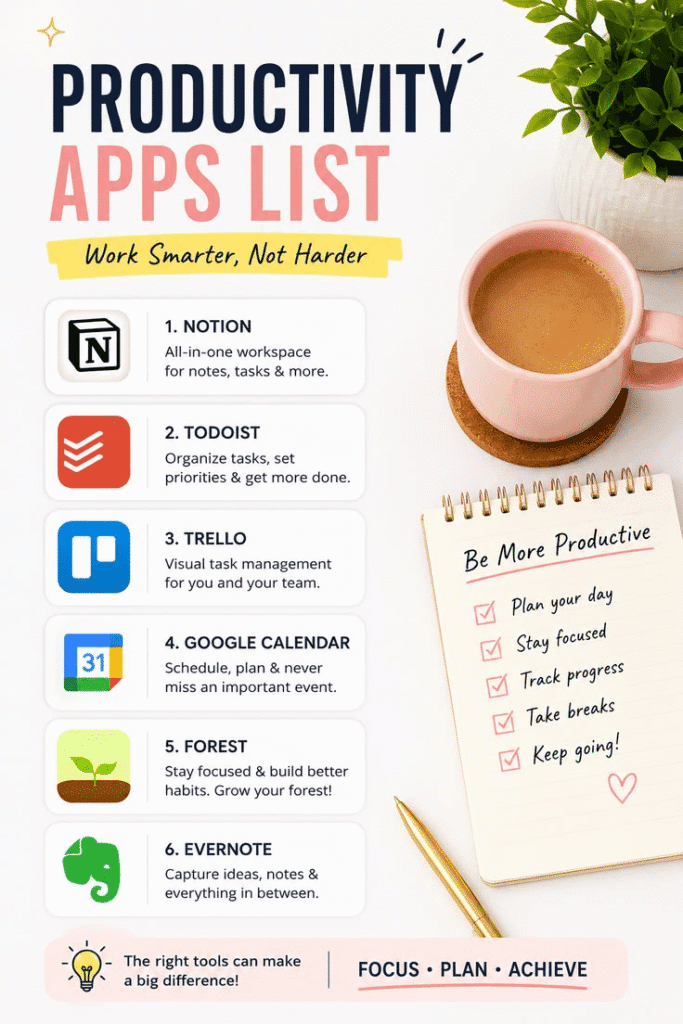
Your task list is the engine that drives your day. These are the best productivity apps 2026 for keeping that engine running at full power.
1. Notion — The All-in-One Workspace
Notion has firmly established itself as one of the best productivity apps 2026 for knowledge workers who want a single home for everything: notes, databases, project wikis, meeting docs, and AI writing support — all in one beautiful interface.
In 2026, Notion AI has grown into a genuinely useful collaborator. It can summarize long documents, extract action items from meeting transcripts, generate first drafts for blog posts or proposals, and create structured project templates from a single prompt. For bloggers and content teams at sites like blogpost.site, this alone is worth the subscription.
- Best for: Freelancers, content creators, small teams, bloggers
- Platforms: Web, Mac, Windows, iOS, Android
- Pricing: Free plan available; Plus from $10/month
Best AI Tools for Content Creators on blogpost.site
2. Todoist — Best Personal Task Manager of 2026
Todoist earns its place on every credible list of the best productivity apps 2026, and the reasons haven’t changed: it’s clean, deeply cross-platform, and genuinely enjoyable to use. The AI-powered Priority system learns from your behavior over time — surfacing the tasks that matter instead of leaving you to sort a chaotic list manually.
If you’ve ever finished a workday feeling busy but unproductive, Todoist is the first app you should install.
- Best for: Individuals, professionals, remote workers
- Platforms: Web, Mac, Windows, iOS, Android, browser extensions
- Pricing: Free plan; Pro from $4/month
3. ClickUp — Best Project Management App for Teams
ClickUp is one of the most capable of the best productivity apps 2026 for team-based workflows. Inside a single platform, you get task management, sprint planning, goal tracking, document collaboration, time tracking, and AI-assisted automation. It’s particularly strong for agencies, dev teams, and remote-first companies that need one source of truth.
- Best for: Startups, agencies, engineering and creative teams
- Platforms: Web, Mac, Windows, iOS, Android
- Pricing: Free plan available; Business from $7/member/month
Best Productivity Apps 2026 for Focus and Deep Work
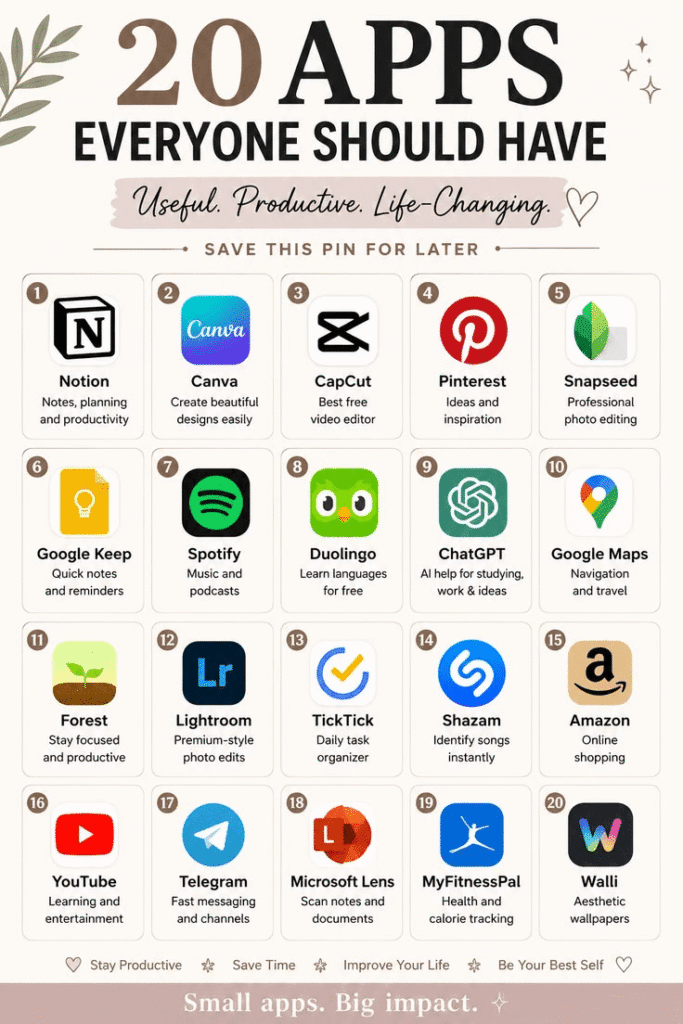
Being busy is easy. Staying focused is the actual challenge. These are the best productivity apps 2026 built specifically to protect your most valuable cognitive resource — your attention.
4. Reclaim.ai — AI That Builds Your Ideal Week For You
Reclaim.ai is one of the most impressive entries in the best productivity apps 2026 lineup. Connect it to your Google Calendar or Outlook, tell it your priorities and habits, and it automatically carves out focus sessions, lunch breaks, and deep work blocks — then defends those blocks against incoming meeting requests.
For professionals split across US and European time zones, this is particularly powerful. Reclaim handles the scheduling math across time zones so you can focus on the actual work.
- Best for: Remote professionals, managers, distributed teams
- Platforms: Web (Google Calendar + Outlook integration)
- Pricing: Free plan; Pro from $8/month
Reclaim.ai — AI Calendar Scheduling
5. Forest — The App That Makes Staying Focused a Game
Forest is brilliantly simple. Start a focus session, and a virtual tree begins to grow. Open social media or leave the app, and your tree dies. Over time, you grow a forest that visually represents your focus history.
It’s one of the best productivity apps 2026 for anyone battling smartphone distraction — especially students and younger professionals navigating the constant pull of notifications.
- Best for: Students, anyone fighting phone distraction
- Platforms: iOS, Android
- Pricing: Free (limited); $1.99 one-time purchase
6. Toggl Track — Know Exactly Where Your Time Goes
You can’t fix what you don’t measure. Toggl Track is consistently one of the best productivity apps 2026 for time tracking because it removes almost all friction from the process. Start a timer, tag it to a project, and stop it when you’re done. The weekly and monthly reports reveal patterns that are often genuinely surprising.
Freelancers use it for client billing. Managers use it for project cost analysis. Individuals use it to figure out where their Tuesdays disappear.
- Best for: Freelancers, consultants, project managers, agency teams
- Platforms: Web, Mac, Windows, iOS, Android, browser extensions
- Pricing: Free for individuals; Starter from $9/user/month
Best Productivity Apps 2026 for Note-Taking and Knowledge Management
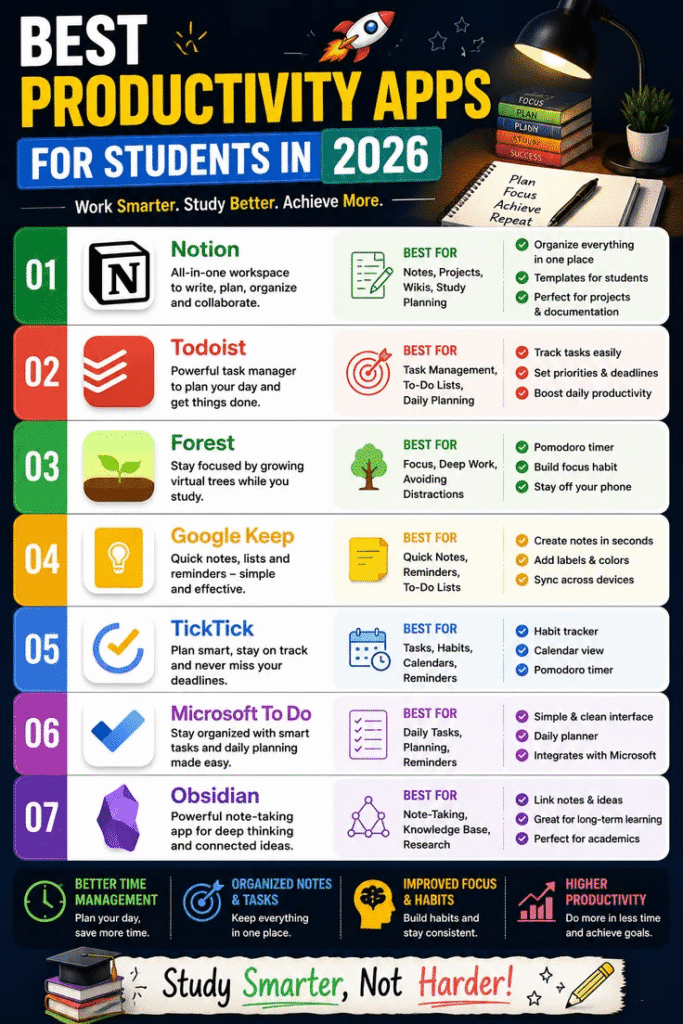
Every great project starts with an idea. Your job is to capture that idea before it disappears. These are the best productivity apps 2026 for building a reliable system to store, connect, and retrieve your knowledge.
7. Obsidian — Build Your True Second Brain
Obsidian is the tool serious knowledge workers reach for when they’ve outgrown basic notes apps. It stores everything as plain Markdown files on your local device — no subscription required, no cloud required, no data leaving your machine without your permission.
The linked notes system allows you to build a personal knowledge graph that mirrors how your brain actually thinks, not how a filing cabinet works. It’s one of the best productivity apps 2026 for writers, researchers, and academics — and especially popular in Europe, where data sovereignty is not just a preference but often a legal requirement.
- Best for: Writers, researchers, academics, developers, privacy-conscious users
- Platforms: Mac, Windows, Linux, iOS, Android
- Pricing: Free for personal use; Sync from $4/month
Best Apps for Remote Workers and Digital Nomads on blogpost.site
8. Apple Notes — The Most Underrated App on This List
Apple Notes rarely appears in articles about the best productivity apps 2026, but it absolutely should. In 2026 it features smart folders, iCloud sync, collaboration with shared notes, handwriting recognition on iPad, document scanning, and Siri integration. For anyone living inside the Apple ecosystem, it’s fast, seamless, and completely free.
- Best for: Apple device users, casual note-takers, Apple ecosystem professionals
- Platforms: Mac, iPhone, iPad (Apple only)
- Pricing: Free
9. Google Keep — Fast, Simple, Always Synced
For users already inside Google Workspace, Google Keep is one of the best productivity apps 2026 for quick capture. Sticky-note-style interface, voice memos, image notes, checklists — all searchable and synced instantly across every device signed into your Google account. There’s almost nothing to learn, which is exactly the point.
- Best for: Google Workspace users, casual note-takers, quick-capture fans
- Platforms: Web, iOS, Android
- Pricing: Free
Best Productivity Apps 2026 for Remote Team Communication
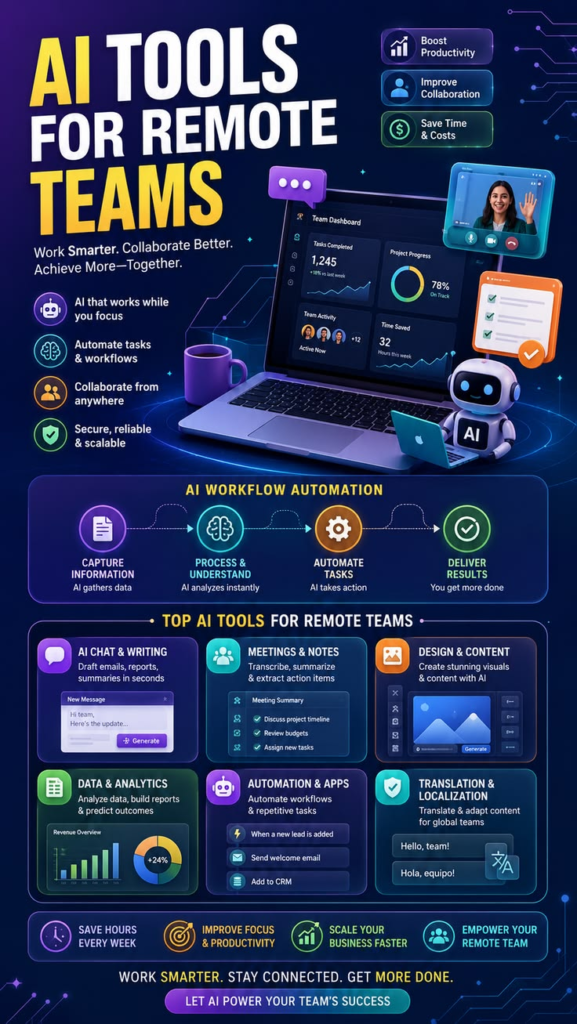
For distributed teams, communication tools are the backbone of everything. These are the best productivity apps 2026 for keeping remote teams aligned, connected, and actually moving forward.
10. Slack — Still the Gold Standard for Team Messaging
Slack remains one of the best productivity apps 2026 for team communication — and it’s earned that position. The AI-generated channel summaries now work beautifully: catch up on everything you missed while you were sleeping without scrolling through 200 messages. Huddles, clips, and canvas documents have turned Slack from a messaging app into a full async-communication platform.
- Best for: Remote teams, startups, agencies, enterprises
- Platforms: Web, Mac, Windows, iOS, Android
- Pricing: Free plan; Pro from $7.25/user/month
11. Loom — Replace Unnecessary Meetings With Video Messages
Loom has become essential for async-first teams. Record your screen and face, then share a link. Your colleague watches it on their schedule — no calendar invite required, no “quick 30-minute sync” that runs an hour.
For teams divided between the US East Coast and Central Europe, Loom is one of the best productivity apps 2026 because it eliminates the need for 7 AM or 9 PM calls just to show someone a design mockup or walk through a document.
- Best for: Remote teams, client communication, async workflows, content reviewers
- Platforms: Web, Mac, Windows, iOS, Android
- Pricing: Free (25 videos); Business from $12.50/month
12. Zoom — Evolved Into a Real Productivity Platform
Zoom in 2026 is a meaningfully different product from its pandemic-era origins. The AI Companion now records, transcribes, and summarizes every meeting — then sends formatted follow-up notes with action items to each participant automatically. For enterprise teams and client-facing professionals, it remains one of the best productivity apps 2026 for structured video communication.
- Best for: Enterprise teams, client meetings, webinars, training sessions
- Platforms: All major platforms
- Pricing: Free (40-minute limit); Pro from $13.33/month
Best Productivity Apps 2026 for Remote Workers in the US and Europe
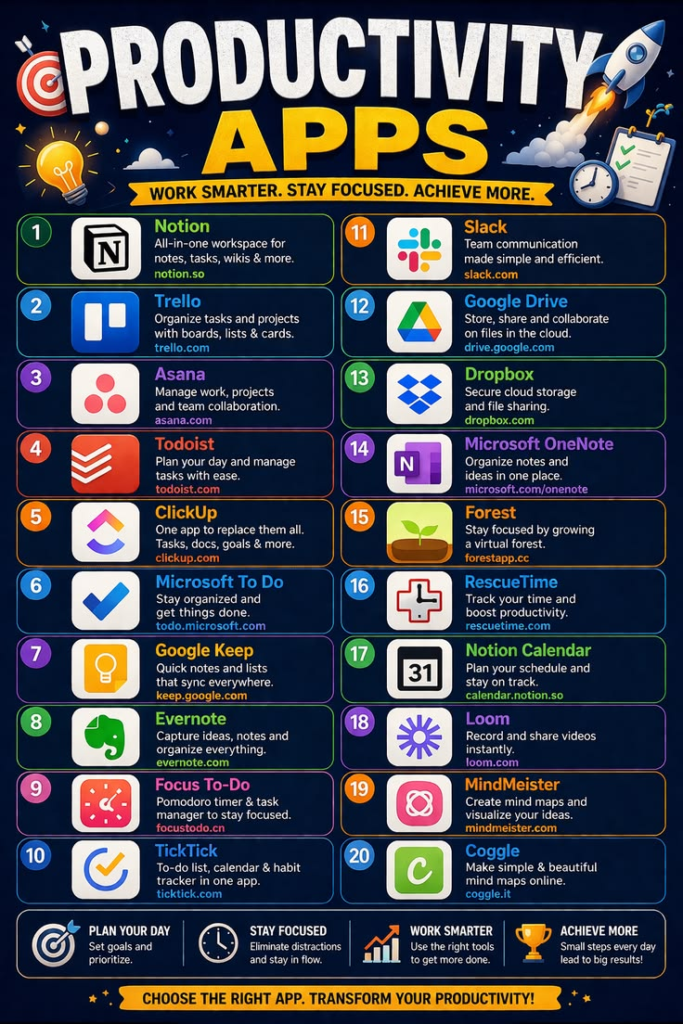
Remote work across the Atlantic Ocean comes with unique challenges. These recommendations are specifically designed for the US–Europe remote work context.
The Time Zone Problem — And the Apps That Solve It
The gap between New York and London is 5 hours. Between New York and Berlin it’s 6. Between New York and Warsaw, it’s 7. The best productivity apps 2026 for bridging this divide are the ones built around async-first workflows:
- Loom — video messages that don’t require anyone to be online simultaneously
- Notion — documentation that’s always available, regardless of time zone
- Reclaim.ai — AI scheduling that respects working hours across multiple time zones
Zapier Integration Directory — Connect Your Apps
GDPR Compliance: What European Users Should Look For
If you’re based in the EU or UK, using apps that process personal data through servers in non-compliant jurisdictions can create regulatory exposure. The best productivity apps 2026 for European professionals should meet these minimum standards:
✅ Published GDPR Data Processing Agreement (DPA)
✅ EU data residency option (or local-first storage)
✅ Clear data retention and deletion policies
✅ Mechanism for data subject access requests
Privacy-safe picks: Obsidian (local-first, zero cloud dependency), Notion (EU DPA available), Toggl Track (GDPR certified), Slack (DPA available on Business+ plans)
The Recommended Stack for Remote Teams of 1–10 People
| Category | Tool | Free Tier? | Monthly Cost (Paid) |
| Tasks & Docs | Notion | ✅ Yes | From $10 |
| Time Tracking | Toggl Track | ✅ Yes | From $9/user |
| Team Messaging | Slack | ✅ Yes | From $7.25/user |
| Focus Scheduling | Reclaim.ai | ✅ Yes | From $8 |
| Async Video | Loom | ✅ Yes | From $12.50 |
This five-app stack covers the complete productivity loop for remote teams — and every single one offers a free tier so you can test before committing.
How to Set Up a Remote Work Environment for Maximum Output on blogpost.site
How to Choose the Best Productivity Apps 2026 Without Wasting Money
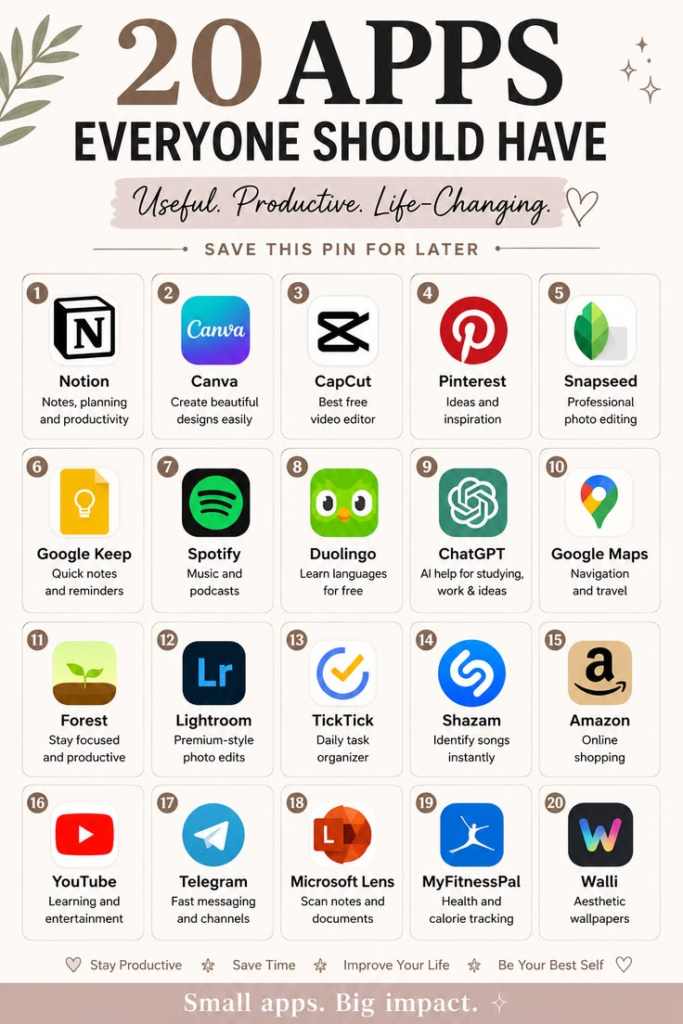
The biggest productivity mistake isn’t failing to use apps. It’s using too many of them. Here’s how to build a lean, effective stack:
Step 1 — Define the Problem First
Before downloading anything, ask: What specific friction am I trying to remove? Missed deadlines? A calendar app won’t fix that if your tasks aren’t organized. Distraction? A focus app won’t help if your task list is chaos. Identify the bottleneck before buying the tool.
Step 2 — One App Per Category, Always
The best productivity apps 2026 perform best when they’re not overlapping or competing with each other. One task manager. One notes app. One communication platform. Resist the urge to hedge.
Step 3 — Start on the Free Tier
Every tool on this list has a free plan. Use it for 30 days before paying for anything. If it’s genuinely one of the best productivity apps 2026 for your workflow, you’ll know within a week.
Step 4 — Check Integration Before You Commit
The best productivity apps 2026 don’t work in isolation — they connect. A task in Todoist that triggers a time entry in Toggl that feeds a Notion dashboard is far more powerful than three disconnected apps. Check the Zapier directory before choosing any new tool.
Step 5 — Audit Your Stack Every Quarter
Set a recurring 30-minute calendar event every 90 days. Ask: Which apps am I actually using? Which am I paying for and ignoring? Which category needs a better solution? The best productivity apps 2026 will be partially different from the best apps of early 2026. Stay current without chasing shiny objects.
FAQs:
Q1: What are the best productivity apps 2026 for complete beginners?
The best productivity apps 2026 for beginners are those that deliver immediate results without a steep learning curve. Start with To do list for task management (clean interface, natural language input), Google Keep for notes (nothing to learn, works instantly), and Toggle Track for time awareness. These three alone can dramatically change how a workday feel — and all three have completely free tiers.
Q2: Are the best productivity apps 2026 worth paying for?
Most of the best productivity apps 2026 are absolutely worth their cost when used consistently. Todoist Pro is $4/month. If better task organization saves you even 20 minutes a week, the return is clear. The key rule: always start free, use the app for 30 full days, and only upgrade when you hit a specific limitation that a paid plan actually removes.
Q3: Which of the best productivity apps 2026 work offline?
Several of the best productivity apps 2026 offer solid offline functionality. Obsidian is the strongest offline option — it requires no internet connection whatsoever since everything is stored locally. Notion, To do list, and Toggle Track all have offline modes that sync automatically when you reconnect. For frequent travelers or anyone in areas with unreliable connectivity, Obsidian is the clear winner.
Q4: What are the best productivity apps 2026 for small business owners?
Small business owners should consider this five-app core stack from the best productivity apps 2026: ClickUp for project management and client work, Slack for team communication, Toggle Track for time tracking and client billing, Loom for async team and client updates, and Notion for SOPs, documentation, and company wikis. This stack covers nearly every operational workflow without enterprise-level pricing.
Q5: Which of the best productivity apps 2026 are GDPR compliant for European users?
Several of the best productivity apps 2026 are built with formal GDPR compliance. Obsidian is the most privacy-forward choice since data never leaves your device. Notion, Slack, Toggl Track, and Zoom all offer signed GDPR Data Processing Agreements for business accounts. Always download and store the DPA from each provider’s legal or privacy page as part of your own compliance documentation.
Conclusion: Build Less. Use More. Get More Done.
Here’s the productivity truth no one talks about enough: the professionals achieving the most with their tools aren’t the ones with the longest app list. They’re the ones who picked two or three tools, learned them deeply, and built reliable habits around them.
The best productivity apps 2026 exist to remove friction — not to add it. Scattered tasks, lost notes, wasted hours, missed deadlines, broken team communication: every tool in this guide was chosen because it solves one of those specific problems, reliably and repeatedly.
Start with one category. Install the top app for it. Use it every single day for 30 days. Then, and only then, expand your stack.
Want more guides like this one? Visit blogpost.site for in-depth app reviews, workflow breakdowns, and tech strategies updated regularly — built for professionals, remote workers, and digital creators in the US and across Europe.

