

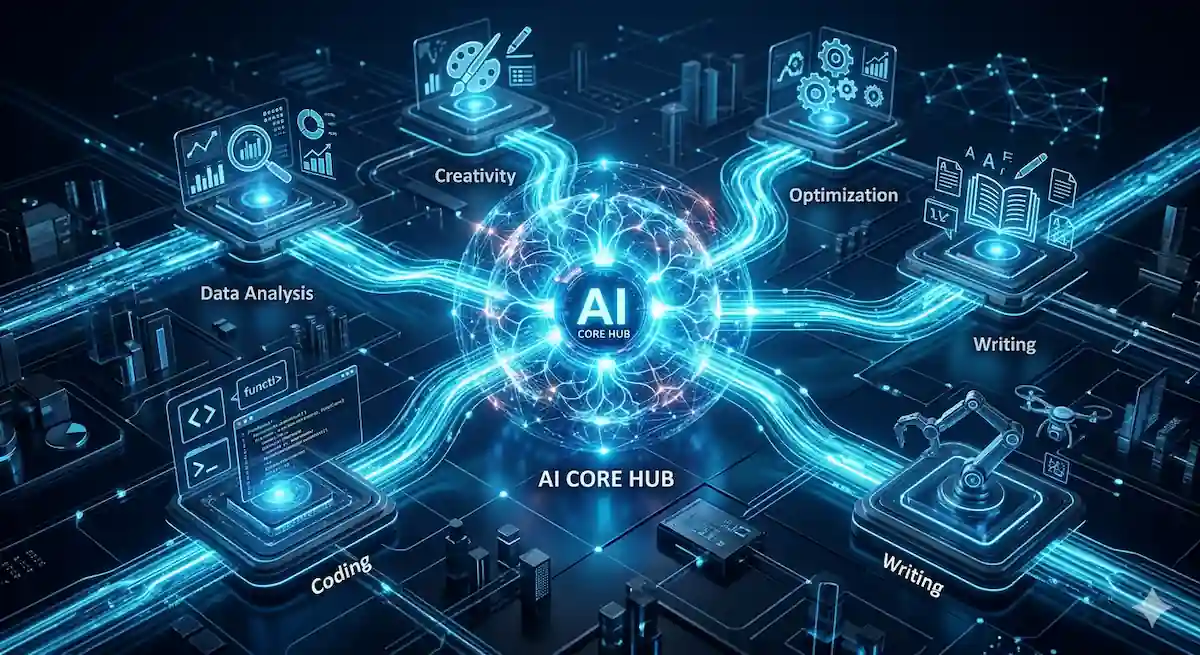
Discover how Agentic AI workflows and multi-agent systems are transforming business operations. Learn to build autonomous digital workforces in our guide.
Have you ever wondered how businesses are transitioning from simple, conversational chatbots to fully autonomous digital workers? The secret lies in Agentic AI workflows and multi-agent systems. We are witnessing a massive shift in how artificial intelligence operates within modern organizations. Instead of waiting for human prompts at every single step, AI can now plan, reason, and execute complex tasks independently.
In this comprehensive guide, we will explore the mechanics behind this technology, how it drives tangible business value, and what the future holds for generative AI automation. Whether you are a business leader looking to scale operations or a tech enthusiast eager to understand the next big leap in AI, mastering these autonomous frameworks is crucial for staying ahead of the curve.
Table of Contents
What Are Agentic AI Workflows and Multi-Agent Systems?
At its core, this technology represents a paradigm shift from passive AI tools to active, goal-seeking digital entities. To understand this, think of traditional AI as a calculator—it only works when you input a formula. Agentic AI, on the other hand, is like a skilled analyst who you hand a raw dataset to and say, “Find out why our sales dropped last quarter and draft a report.” The agent figures out the steps on its own.
Unlike a standard chatbot that waits for step-by-step instructions, autonomous AI can break down complex goals into actionable, independent steps. These workflows rely on AI agents that use Large Language Models (LLMs) as their reasoning engines. When you scale this up, you get multi-agent setups—teams of AI, each with a specific role, working together just like a human corporate team.
To put it simply, these collaborative frameworks function like a highly coordinated digital workforce. One agent might act as a researcher, another as a data analyst, and a third as a content drafter, all passing information back and forth seamlessly until the final goal is achieved.
How Agentic AI Transforms Business Operations
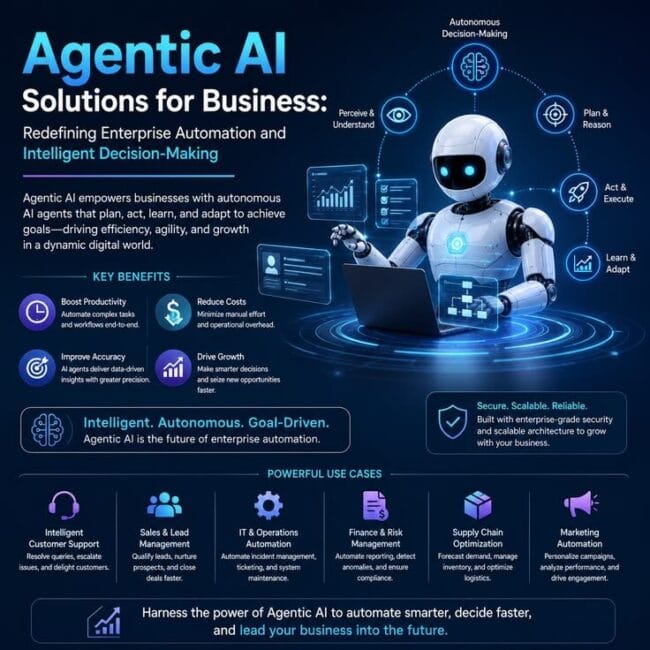
Businesses today face mounting pressure to do more with less while maintaining high quality. By implementing these systems, organizations can delegate complex, multi-step processes to AI, freeing up human workers to focus on strategy and relationship-building.
The Power of Collaborative AI Systems

When building multi-agent frameworks, you are essentially creating a team of specialized digital workers. In this setup, agents communicate, debate, and collaborate to solve problems. For example, in a software development scenario, you might have a “Coder” agent writing scripts, a “Tester” agent checking the code for bugs, and a “Manager” agent ensuring the project stays on track.
This division of labor is why multi-agent setups outperform monolithic AI models in real-world business scenarios. A single AI model asked to write, test, and deploy code will often get confused or lose context. By splitting the task among a collaborative team, each agent maintains a narrow, highly focused context window, resulting in fewer errors and higher quality output.
Real-World Use Cases

Let’s look at how these systems operate in a customer support environment. Imagine a customer sends an email about a broken product:
- Triage Agent: Reads the email, categorizes the urgency, and routes it.
- Investigation Agent: Pulls up the customer’s purchase history and warranty status.
- Resolution Agent: Drafts a personalized apology email and processes a refund.
- QA Agent: Reviews the drafted email to ensure it aligns with company tone and policy before sending.
This level of automation makes autonomous AI indispensable for modern enterprises. They can be applied to supply chain logistics, financial forecasting, content marketing, and even legal document review. Whether you are operating a business in a bustling tech hub or managing a remote global team, these systems operate 24/7, ensuring that work never stops.
Designing Effective Multi-Agent Systems

Building your own autonomous Agentic AI teams requires careful planning and a solid understanding of your business objectives. You cannot simply plug an AI into your business and expect it to work flawlessly; it requires structured design.
The architecture usually involves an orchestrator agent that routes tasks to specialized sub-agents. The orchestrator acts like a project manager, understanding the end goal and knowing which agent has the right tools to complete each specific task.
Best Practices for AI Orchestration Platforms
To get the most out of these frameworks, you must prioritize clear communication protocols between agents. AI orchestration platforms like LangChain or AutoGen provide the foundation for these agents to interact. Here are a few best practices:
- Define Clear Roles: Just like human employees, AI agents need clear job descriptions. Do not let your “writer” agent execute SQL queries.
- Establish Guardrails: Agents can sometimes hallucinate or go off-track. Build checkpoints where a human can review the work before it goes live.
- Equip with Tools: Agents are only as good as the tools they can access. If an agent needs to check inventory, ensure it has API access to your inventory management system.
Security is another critical factor. Because these agents often need access to sensitive company databases or financial records to do their jobs, you must implement strict access controls. Follow the principle of least privilege—give agents access only to the exact data they need to complete their specific task.
Overcoming Challenges in Autonomous AI
While the benefits are vast, deploying multi-agent frameworks comes with unique hurdles. Understanding these challenges beforehand can save your organization time and money.
One common pain point is the potential for hallucinations to cascade across the network. If Agent A generates a false piece of information, Agent B might take that fiction as fact and build an entire strategy around it. This “telephone game” effect can lead to disastrous outcomes if left unchecked.
To combat this, developers must implement verification steps within the workflow. For instance, a dedicated “Fact-Checker” agent can be introduced into the loop to verify data against a trusted database before passing it to the next agent. Additionally, setting strict limits on how many steps an agent can take to reach a goal prevents the system from getting stuck in infinite loops, which can quickly drain API budgets.
By implementing strict guardrails and continuous monitoring, developers can ensure these systems remain reliable, accurate, and cost-effective.
The Future of Generative AI Automation and LLM Agent Frameworks

As LLM agent frameworks mature, the capabilities of autonomous teams will only expand. We are moving toward a future where AI agents will not just execute tasks within a single company but will interact with agents from other organizations. Imagine your procurement agent negotiating a bulk discount with a supplier’s sales agent entirely autonomously.
The evolution of generative AI automation will also see these systems becoming more accessible. Currently, building them requires a fair amount of coding knowledge. However, visual drag-and-drop interfaces are rapidly being developed, allowing non-technical business users to design their own AI teams.
Businesses that start experimenting with agentic frameworks today will have a significant competitive advantage tomorrow. They will build the proprietary data pipelines and operational muscle memory needed to scale these technologies as they become more powerful.
Frequently Asked Questions
1. What is the difference between a standard AI chatbot and a multi-agent system? A standard AI chatbot operates in a reactive, turn-based manner, answering single prompts without retaining long-term context or taking independent action. In contrast, multi-agent systems are proactive and goal-oriented. They can break down a large objective into smaller tasks, use tools independently, and collaborate with other AI agents to complete the job without continuous human intervention.
2. How do multi-agent systems improve business efficiency? They improve efficiency by distributing complex tasks among specialized AI agents, much like a human team. This reduces the cognitive load on any single AI model, minimizing errors and hallucinations. It allows processes like customer support, data analysis, and software development to run simultaneously 24/7, drastically reducing project turnaround times.
3. Are autonomous AI workflows safe for enterprise use? Yes, they are safe for enterprise use provided that strict guardrails are implemented. Businesses must use the principle of least privilege when granting AI agents access to internal data. Additionally, implementing “human-in-the-loop” checkpoints—where a human reviews the AI’s work before a final action is taken (like sending an email or processing a refund)—ensures maximum security and quality control.
4. What tools are used to build these systems? Popular tools and frameworks for building these systems include LangChain, AutoGen, CrewAI, and LlamaIndex. These open-source frameworks provide the foundational architecture for agents to communicate, remember past interactions, and use external tools like web browsers or database queries.
5. Can small businesses benefit from this technology? Absolutely. Small businesses can use these systems to act as a virtual workforce, doing the jobs of multiple employees at a fraction of the cost. From automating entire marketing campaigns to handling complex customer onboarding sequences, agentic AI allows small teams to operate with the efficiency and scale of a much larger enterprise.
Conclusion
The era of simple, conversational AI is rapidly ending. The future belongs to autonomous, goal-seeking digital workers that can plan, reason, and collaborate. By leveraging Agentic AI workflows & multi-agent systems, businesses can unlock unprecedented levels of productivity, allowing human teams to focus on high-level strategy and creative problem-solving.
Whether you are looking to streamline customer support, accelerate software development, or optimize internal logistics, the time to explore this technology is now.
Are you ready to transform your business operations with autonomous AI? Contact our team of AI integration experts today for a free consultation, and start building your custom AI workflows to stay lightyears ahead of your competition.


2 thoughts on “Powerful Agentic AI Workflows & Multi-Agent Systems Guide 2026”