


A plain-English guide to AI data privacy laws for small businesses in 2026 — what applies to you, what’s changing, and how to stay compliant without a legal team.
If you’ve ever typed a customer’s name, email, or order history into ChatGPT to draft a quicker response, you’ve already stepped into a legal gray area most small business owners don’t realize exists. That single, harmless-feeling habit is exactly the kind of thing AI data privacy laws for small businesses are now starting to address — and in 2026, the rules are changing faster than most owners can track.
Nineteen states now have comprehensive consumer privacy laws on the books, three of them brand new as of January 2026. Colorado just rewrote its AI law from scratch in May. Connecticut added a requirement specifically about training AI models on customer data. And the FTC has made it clear that “small” doesn’t automatically mean “exempt.” If you run a business that collects customer data and uses any AI tool — even something as simple as a chatbot or an email assistant — this is no longer a problem you can put off.
This guide breaks down what AI data privacy laws for small businesses actually require, which thresholds determine whether you’re covered, what’s changed at the state and federal level in 2026, and the practical steps you can take this month to reduce your risk — without hiring a full-time compliance team.
A quick note before we go further: this article is for general informational purposes and isn’t a substitute for legal advice. Laws vary by state and change often, so it’s worth confirming your specific obligations with a privacy attorney.
Table of Contents
What Are AI Data Privacy Laws for Small Businesses, Exactly?

There’s no single federal law called the “AI Data Privacy Act.” Instead, AI data privacy laws for small businesses are a patchwork made up of three layers:
- State comprehensive privacy laws (California, Colorado, Connecticut, and 16 others) that govern how any business collects, stores, and shares personal data — AI or not.
- AI-specific state laws, like Colorado’s automated decision-making rules, that add extra disclosure and notice requirements when AI is used to make decisions that affect people.
- Federal enforcement, mainly through the Federal Trade Commission, which doesn’t have an AI-specific statute but actively polices AI-related data misuse under its existing consumer protection authority.
For a small business, this means compliance isn’t about finding “the one law that applies to me.” It’s about figuring out which combination of state and federal rules touches your specific business activities — which is exactly what trips most owners up.
Do AI Data Privacy Laws for Small Businesses Actually Apply to You?
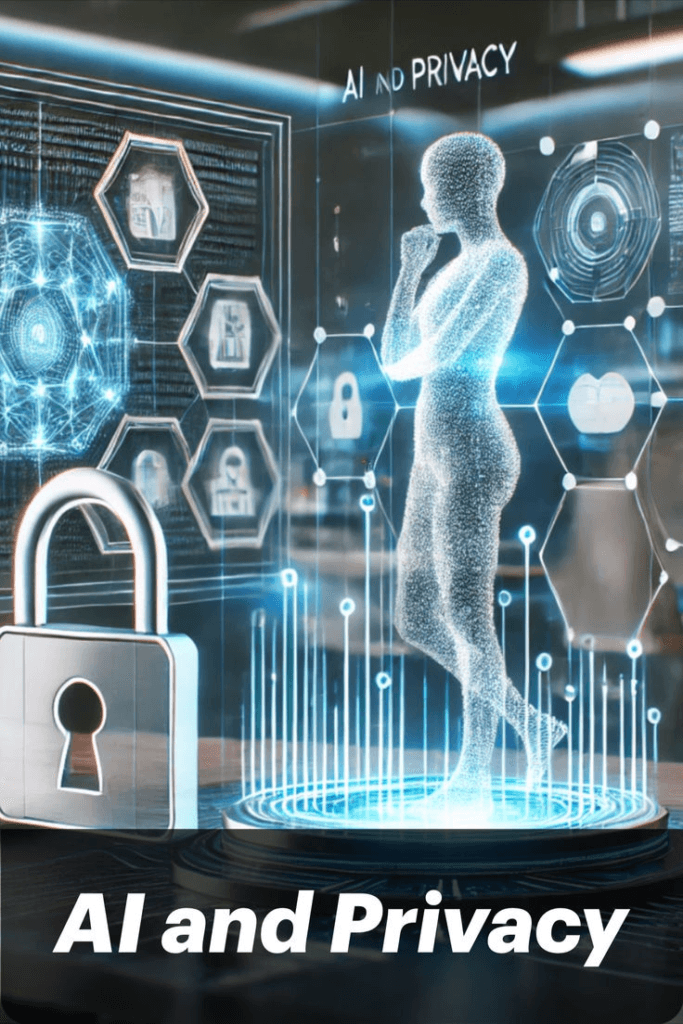
This is the question every small business owner asks first, and the honest answer is: it depends on the state, and increasingly, on what you’re doing with AI rather than how big you are.
Revenue and Consumer-Volume Thresholds
Most state privacy laws use a numbers test rather than a strict “small business” label. A few examples as of 2026:
- California’s CCPA/CPRA generally applies to businesses with over $25 million in annual revenue, or those that handle personal data on 100,000+ consumers, or that derive at least half their revenue from selling personal data.
- Indiana and Kentucky’s new 2026 laws apply once a business processes data on 100,000+ residents, or 25,000+ residents while deriving more than half its revenue from data sales.
- Connecticut’s amended law, effective July 2026, drops its threshold from 100,000 to just 35,000 consumers — and applies regardless of volume if the business processes sensitive data or sells personal data at all.
- Rhode Island’s new law kicks in at 35,000 consumers, or 25,000 if the business derives more than 20% of revenue from data sales.
If your business stays well under these numbers and doesn’t sell personal data, you may genuinely fall outside several of these laws. But “well under” is doing a lot of work in that sentence — many small e-commerce shops, local clinics, and service businesses cross these thresholds faster than they expect once email lists, CRM data, and AI-tool logs are counted.
Why “Small” Doesn’t Always Mean Exempt
Here’s where AI data privacy laws for small businesses get trickier than general privacy law. A few specific examples:
- Texas’s privacy law has little to no minimum threshold for compliance, meaning even modest-sized businesses can fall within scope.
- Colorado’s rewritten AI law (SB 26-189), signed in May 2026 and effective January 1, 2027, eliminated the prior exemption for companies with fewer than 50 employees that existed under the original 2024 version.
- Youth-privacy laws, like Texas’s App Store Act, apply based on what your business does — not how many employees you have.
The takeaway: revenue and headcount matter, but they’re not the whole picture. If your AI tools touch hiring decisions, lending, healthcare, insurance, or housing, you may be in scope regardless of size.
State-by-State Highlights: AI Data Privacy Laws for Small Businesses in 2026
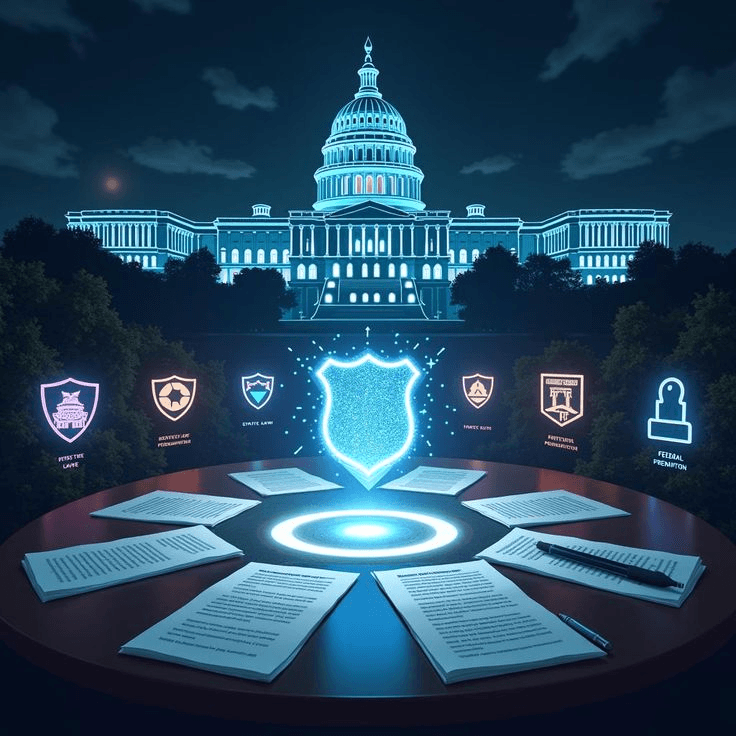
You don’t need to memorize all 19 state laws, but a few changes in 2026 are worth knowing if you operate across state lines.
California’s CCPA/CPRA and Automated Decision-Making
California remains the strictest baseline among AI data privacy laws for small businesses. Recent updates require businesses to disclose more about how automated decision-making — including AI-driven profiling or personalization — works, and California is the only state that extends privacy rights to employee and B2B contact data, not just consumers. Even small businesses serving California residents should review whether their AI tools fall under these disclosure rules.
Connecticut’s New AI Training Disclosure Rule
Connecticut’s updated law now requires businesses to disclose if personal data is being used to train large language models — one of the clearest examples yet of AI data privacy laws for small businesses moving from general privacy rules toward AI-specific ones. If your business uses customer data to fine-tune a chatbot, build a recommendation engine, or feed any AI system, this is a direct, AI-specific obligation that didn’t exist a year ago.
Colorado’s Rewritten AI Law: From Risk Management to Notice
Colorado’s original AI Act would have required broad risk-management programs and impact assessments. The replacement law, SB 26-189, narrows that down to a more workable notice-and-transparency framework: businesses using AI to materially influence “consequential decisions” — employment, lending, housing, healthcare, insurance, and education — must give clear notice, allow a human review path, and keep records for at least three years. It takes effect January 1, 2027, with rulemaking due by that same date.
(External link suggestion: link to IAPP’s analysis of the Colorado AI Act for readers who want the full legal detail: https://iapp.org/news/a/the-colorado-ai-act-what-you-need-to-know)
Federal Rules: How the FTC Treats AI Data Privacy Laws for Small Businesses
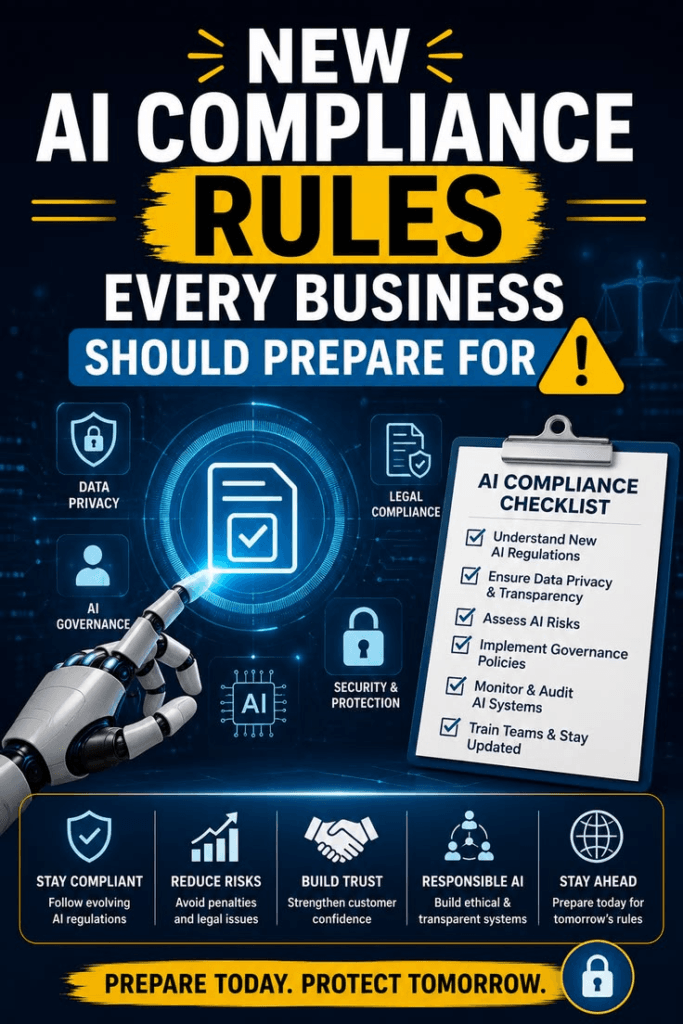
Even without a dedicated AI statute, the FTC has been one of the most active enforcers in this space. Using its existing authority under Section 5 of the FTC Act — which prohibits unfair or deceptive practices — the agency has pursued companies for:
- Sharing sensitive health data for advertising purposes (as in past actions involving health and wellness apps)
- Selling precise location data without adequate consumer consent
- Making false or unsubstantiated claims about what an AI tool can actually do
- Failing to secure AI training data, including using improperly obtained consumer information to build models
None of these enforcement actions carved out an exception for small businesses. The FTC’s consistent position is that the size of your company doesn’t change your obligation to handle personal data honestly and securely. In 2026, the agency has also been working through a federal policy statement on AI enforcement, which may eventually clarify how state and federal AI data privacy laws for small businesses interact — but that process is still unfolding, so treat any “federal preemption” headlines with caution until it’s finalized.
(External link suggestion: link to the FTC’s official AI industry page for ongoing updates: https://www.ftc.gov/industry/technology/artificial-intelligence)
The Hidden Risk Most Small Businesses Miss: “Shadow AI”
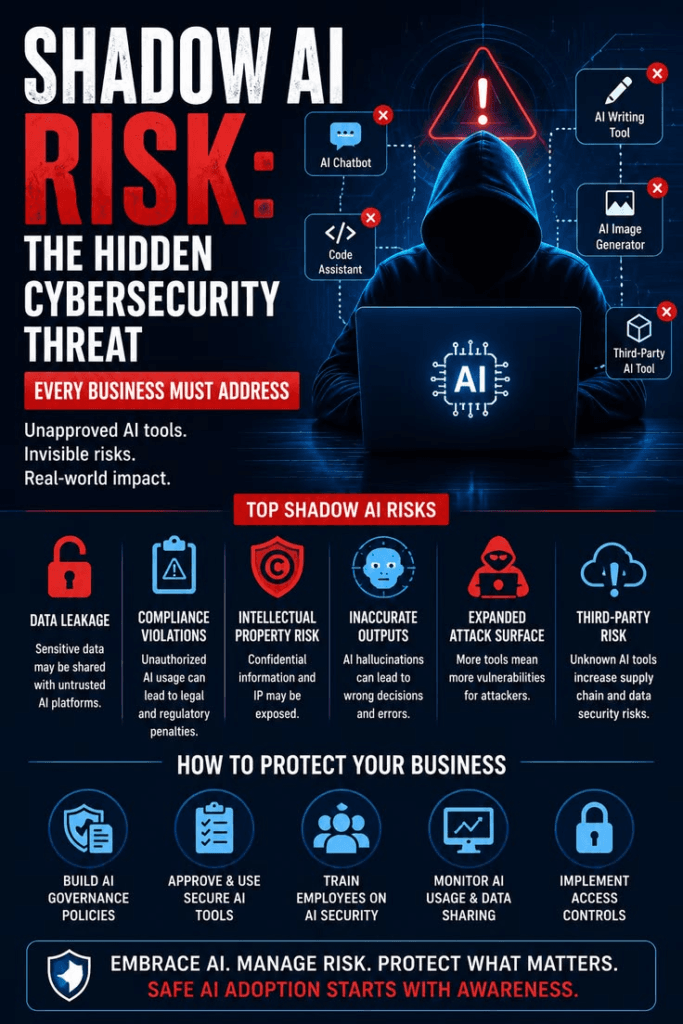
Here’s a risk that has little to do with which state law applies and everything to do with daily habits: employees using personal AI accounts for work tasks.
When staff paste customer details, contracts, or internal data into a personal ChatGPT or similar account, the business loses all visibility into where that data goes, how long it’s retained, and whether it could resurface elsewhere. This “shadow AI” use is one of the fastest-growing gaps in AI data privacy laws for small businesses — not because the law explicitly names it, but because it quietly creates the exact kind of uncontrolled data exposure these laws are designed to prevent.
A simple, written policy — covering which AI tools are approved, what data can and can’t be entered, and who to ask before adopting a new one — closes most of this gap without any technical investment.
A Practical Compliance Checklist for Small Business Owners
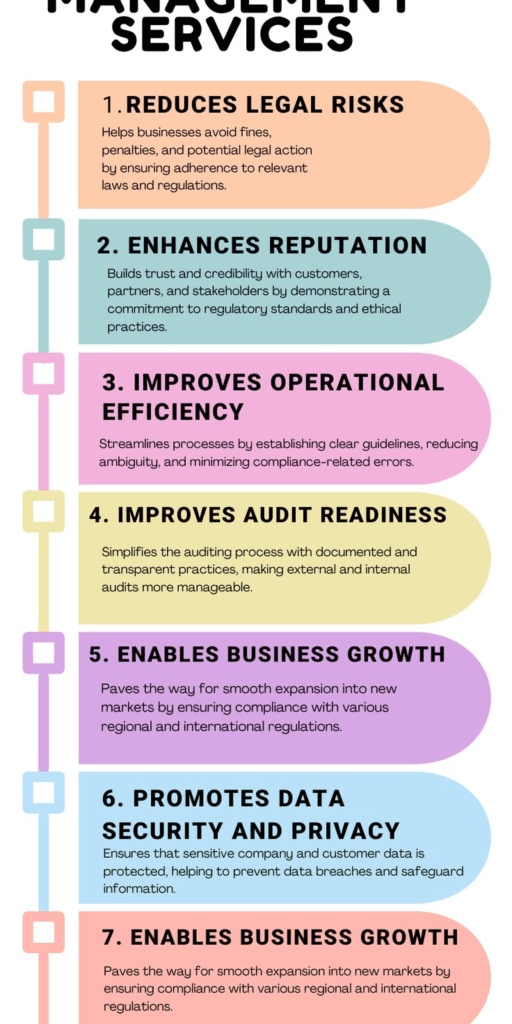
You don’t need a legal department to make real progress. Here’s a starting checklist for navigating AI data privacy laws for small businesses:
- Map your data. List what personal data you collect, where it’s stored, and which tools (including AI tools) touch it.
- Audit your AI vendors. Confirm whether any SaaS tool you use has AI features turned on by default, and check their data-handling terms.
- Update your privacy policy. Disclose if you use AI for decision-making, personalization, or model training — this is now an explicit requirement in states like Connecticut.
- Write an internal AI use policy. Set clear rules for employees on approved tools and what data can never be entered into them.
- Check your thresholds in every state you operate in. AI data privacy laws for small businesses shift their revenue and consumer-volume numbers yearly; don’t assume last year’s exemption still applies.
- Document your reasoning. Even a simple internal memo showing you assessed your obligations can matter if a regulator ever asks.
Common Mistakes to Avoid With AI Data Privacy Laws for Small Businesses

- Assuming size alone creates an exemption. This is the single most common misread of AI data privacy laws for small businesses — several 2026 laws either lack a small-business carve-out or have removed one.
- Ignoring vendor and AI-tool contracts. If a vendor mishandles data, your business can still share liability.
- Treating one state’s compliance as universal. A policy built only around your home state may miss obligations triggered by out-of-state customers.
- Skipping the privacy policy update. Many AI-specific disclosure rules are new in 2026 and easy to overlook if your policy hasn’t been refreshed recently.
- Waiting for the law to “settle.” Between Colorado’s rewrite, Connecticut’s amendments, and ongoing FTC activity, AI data privacy laws for small businesses are unlikely to stay still for long — waiting usually means falling further behind.
Frequently Asked Questions About AI Data Privacy Laws for Small Businesses
Do AI data privacy laws apply to small businesses?
Yes, often. AI data privacy laws for small businesses vary by state — while some exempt businesses below certain revenue or consumer-volume thresholds, others, including Texas’s privacy law and Colorado’s updated AI law, apply with little or no small-business exemption, especially when AI is used in consequential decisions.
What is the smallest business that needs to comply with state privacy laws?
There’s no single size cutoff under current AI data privacy laws for small businesses. Thresholds typically depend on either annual revenue (often around $25 million), the number of consumers’ data processed annually (commonly 25,000–100,000), or the percentage of revenue derived from selling personal data — and these vary by state.
Does the FTC regulate AI use by small businesses?
Yes. Even without an AI-specific statute, the FTC enforces AI data privacy laws for small businesses through its existing consumer protection authority, primarily Section 5 of the FTC Act, applying it to AI-related data practices regardless of company size, and it has brought enforcement actions against businesses of varying sizes for deceptive AI claims and improper data handling.
What happens if a small business doesn’t comply with AI data privacy laws?
Consequences for violating AI data privacy laws for small businesses vary by state but can include civil penalties per violation, mandatory corrective action, and reputational harm from public enforcement actions. Some states offer a cure period to fix violations before penalties apply, while others, like Rhode Island, do not.
How can a small business become compliant with AI data privacy laws without hiring a lawyer?
Start with a data inventory, update your privacy policy to disclose AI use, set internal rules for employee AI use, and review thresholds in every state where you have customers. Most of the groundwork for AI data privacy laws for small businesses can be handled in-house this way. For ongoing or complex situations, a one-time consultation with a privacy attorney is still the safest way to confirm your specific obligations.
Final Thoughts: Staying Ahead of AI Data Privacy Laws for Small Businesses
The pattern across 2026 is consistent: state legislatures and federal regulators are narrowing the gap that used to protect small businesses by default. AI data privacy laws for small businesses are no longer a back-burner issue reserved for large tech companies — they’re a real, near-term compliance question for any business using customer data and AI tools together.
The good news is that most of the practical groundwork — mapping your data, updating your privacy policy, and setting basic AI use rules for staff — can be done in-house, in a matter of weeks, without waiting for every legal question to be fully settled.
Ready to take the next step?
Pull together a quick inventory of every AI tool your business currently uses, check it against your state’s privacy law thresholds, and consider a one-time consultation with a privacy attorney to confirm where you stand under AI data privacy laws for small businesses. A little groundwork now is far cheaper than an enforcement letter later.


One thought on “AI Data Privacy Laws for Small Businesses: A Plain-English Guide for 2026”