


AI companion apps are booming in 2026. See which ones actually help with loneliness, how they compare to real therapy, and how to use them safely.
A few years ago, telling someone you talked to an AI every day would have sounded strange. In 2026, it barely raises an eyebrow. AI companion apps have gone from a niche curiosity to a market worth tens of billions of dollars, and millions of people now use them daily for conversation, comfort, or just someone to talk to at 2 a.m.
But do AI companion apps actually help with loneliness, or do they just paper over it? In this guide, you’ll learn what AI companion apps are, which ones are worth trying in 2026, how they stack up against AI therapy chatbots and real therapists, and how to use AI companion apps without letting them replace the human connection you actually need.
Table of Contents
What Are AI Companion Apps?
AI companion apps are chatbot platforms built to simulate an ongoing relationship rather than answer one-off questions. Unlike a general assistant like ChatGPT, AI companion apps remember your conversations, develop a consistent personality, and are designed to make you feel heard over time. Some function as AI girlfriend or boyfriend apps, some as platonic AI friends, and others lean into AI therapy chatbot territory, offering structured emotional support.
The common thread across every AI companion app is emotional continuity — you’re not starting from zero each time you open the app.
How Big Is the AI Companion App Trend in 2026?
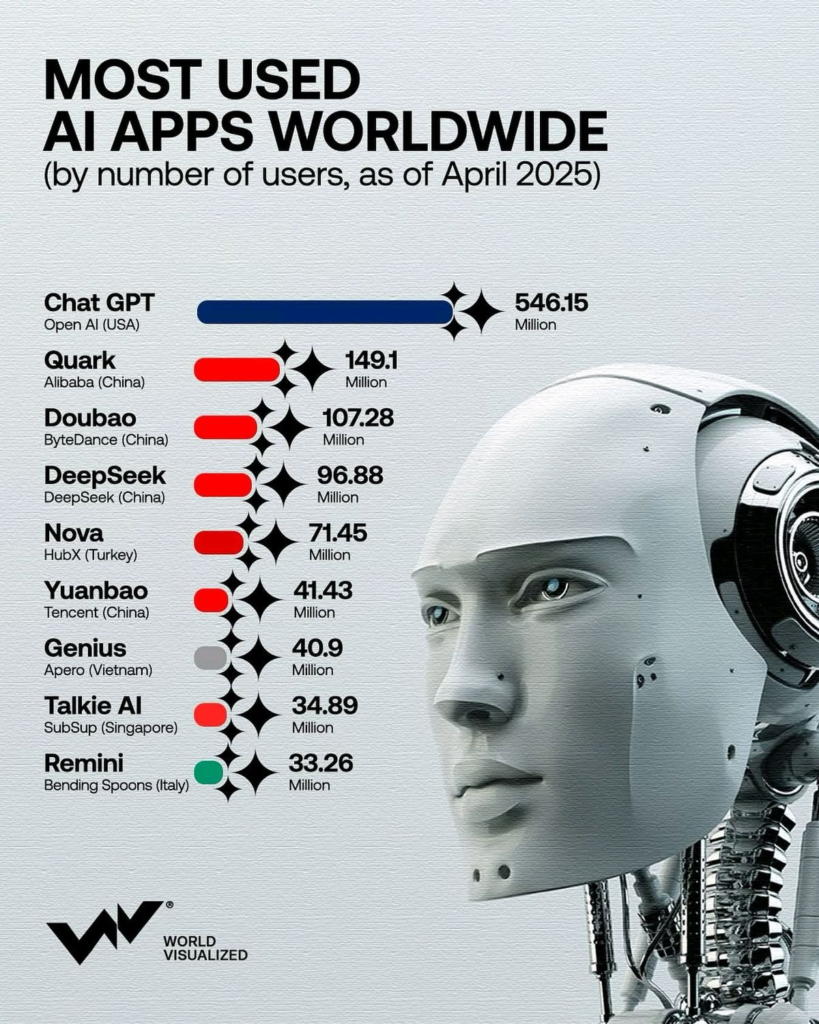
The growth here has been fast by any standard. Industry trackers now count hundreds of active AI companion apps generating real revenue, with a large share launched in just the past year. Character.AI alone reports well over 200 million registered users, and Replica has been downloaded tens of millions of times worldwide.
Usage data paints a clear picture of why people turn to AI companion apps: roughly 4 in 10 users cite emotional support as their main reason for using them, around a third use them mainly for entertainment or roleplay, and about 3 in 10 say loneliness and social connection are their primary motivation, according to industry research compiled by AI Companion Pick. Gen Z attitudes have shifted too — a much larger share now say there’s nothing wrong with having an AI friend compared to just a couple of years ago.
That growth is happening against a backdrop the U.S. Surgeon General has called a loneliness epid emic, which is a big part of why AI companion apps found such a fast-growing audience in the first place.
Best AI Companion Apps to Try in 2026
Not every AI companion app is built for the same purpose. Here’s how the main categories break down.
Best Overall AI Companion App: Replika
Replika remains the most established name in the AI companion app space. It’s built around a customizable avatar, long-term memory of your moods and life events, and features like guided reflection and mood tracking. It’s a solid starting point if you want an AI companion app focused on ongoing emotional support rather than fantasy roleplay.
Best Free Character.AI Alternative
If you’re looking for a Character.AI alternative that’s free to use, a few names come up repeatedly in 2026 comparisons: Chai (casual, mobile-friendly conversations with a free tier), Janitor AI (large community character library), and SillyTavern paired with a local model if you want full control and zero subscription cost, at the price of a more technical setup. Each has a different trade-off between ease of use, character memory, and cost — worth testing two or three before settling on one.
Best AI Therapy-Style Chatbot
If your goal leans more toward mental health support than companionship, apps like Woebot and Wysa are built differently from companion apps — they’re grounded in cognitive behavioral therapy techniques and have published clinical research behind them, rather than being designed primarily to simulate a relationship. They’re a better fit if what you’re really looking for is an AI therapy chatbot rather than an AI companion app.
Is Talking to an AI Bad for Your Mental Health?

This is the most searched question about AI companion apps in 2026, and honestly, the research doesn’t give a single clean answer — it cuts both ways.
The case that AI companion apps help: A Harvard Business School study published in the Journal of Consumer Research found that interacting with an AI companion reduced people’s momentary feelings of loneliness about as much as talking to another person, and more than passive activities like watching videos. Researchers linked this to users feeling “heard” — the AI paying attention and responding with apparent empathy.
The case for caution: Other research points the opposite direction. A joint study from MIT Media Lab and OpenAI found that heavier daily chatbot use correlated with higher loneliness and greater emotional dependence over time, though the researchers were clear this was a correlation, not proof that AI companion apps cause the problem. Separately, researchers at Aalto University in Finland studied long-term Replika users and found that while AI companion apps offered real short-term comfort, heavy long-term use was associated with rising signs of distress and users pulling back from real-world relationships. Their explanation: AI companions never push back, never get busy, and never set boundaries — which can quietly make messy, ordinary human relationships feel like more effort than they’re worth by comparison.
The honest takeaway: AI companion apps aren’t inherently good or bad for mental health. What matters is how much they’re used, and whether they’re supplementing your social life or slowly replacing it.
AI Therapy Apps vs Real Therapist: What’s the Difference?

This comparison comes up constantly, and it’s worth being direct about it: AI therapy apps and AI companion apps are not a substitute for a licensed therapist, even the well-designed ones.
| AI Therapy Apps / AI Companion Apps | Real Therapist | |
|---|---|---|
| Availability | 24/7, instant | Scheduled sessions |
| Cost | Often free or low monthly cost | Can be expensive, sometimes insurance-covered |
| Clinical training | None (companion apps) or limited, structured techniques (some therapy apps) | Licensed, trained to diagnose and treat |
| Confidentiality/privacy | Varies by app, often used to train the model | Legally protected |
| Crisis handling | Not equipped for crisis situations | Trained to respond to crises |
AI companion apps and AI therapy chatbots are genuinely useful for daily emotional check-ins, practicing what you want to say before a hard conversation, or simply feeling less alone in the moment. But for diagnosable mental health conditions, or if you’re in real distress, a licensed professional is the right call — not an app.
How to Use AI Companion Apps Safely
A few practical guardrails, based on what the research above actually points to:
- Set a time limit. The studies linking AI companion apps to worse outcomes almost always involve heavy, daily, long-term use — not occasional check-ins.
- Notice if it’s replacing plans, not just filling gaps. An AI companion app used alongside a social life is very different from one used instead of it.
- Be careful what you share. Most AI companion apps store and often use your conversations to train their models. Avoid sharing anything you wouldn’t want stored indefinitely.
- Treat “unconditional support” as a feature, not a benchmark. Real relationships involve friction. If an AI companion app is making human relationships feel not worth the effort by comparison, that’s worth noticing.
- Use AI therapy-style apps for structure, not diagnosis. Apps like Woebot or Wysa can teach coping techniques; they can’t diagnose or treat a condition the way a clinician can.
Frequently Asked Questions
What is the best AI chatbot for loneliness in 2026?
There’s no single “best” AI chatbot for loneliness — it depends on what you need. Replika is the strongest general-purpose option for ongoing emotional support, while Woebot or Wysa are better if you want structured, therapy-informed techniques rather than an ongoing companion relationship.
Is talking to AI bad for my mental health?
Not inherently. Research shows AI companion apps can meaningfully reduce loneliness in the short term, but heavy, long-term daily use has been linked to increased emotional dependence and reduced real-world social contact in some studies. Moderate, intentional use appears to be the safer pattern.
Are AI therapy apps as good as a real therapist?
No. AI therapy apps can offer helpful coping techniques and are available anytime, but they aren’t licensed, can’t diagnose conditions, and aren’t equipped to handle a mental health crisis. They work best as a supplement to, not a replacement for, professional care.
What are the best free Character.AI alternatives?
Chai, Janitor AI, and SillyTavern (paired with a free local model) are among the most commonly recommended free Character.AI alternatives in 2026, each with different trade-offs between ease of use, character memory, and setup complexity.
Are AI girlfriend and boyfriend apps healthy to use?
They can be, in moderation. Research suggests these AI companion apps genuinely reduce loneliness in the moment. The concern isn’t the app itself — it’s using it as a full replacement for human relationships rather than a supplement to them.
Final Thoughts
AI companion apps aren’t going anywhere in 2026 — the technology is only getting more capable, and the loneliness problem driving demand for it isn’t going away either. Used with some intention, AI companion apps can genuinely help you feel heard on a hard day. Used as a full substitute for human connection, the research suggests they can quietly make things worse.
If you’re exploring this space, start with one AI companion app, set a loose time limit, and pay attention to whether it’s adding to your life or slowly replacing parts of it. And if what you’re really carrying is more than a lonely evening, an app isn’t the right tool — a licensed therapist is.
If this guide helped you make sense of the AI companion app landscape, explore our other AI tool comparisons to find what actually fits your needs.


На этом портале можно найти обилие нужной материалов.
https://permgorod.ru/novosti/174-permskiy-dom-kogda-steny-rukhnuli-posredi-dnya/
На этом сайте есть возможность отыскать много полезной сведений.
https://graph.org/Top-5-brendov-krossovok-kotorye-ya-gotova-nosit-kazhdyj-den-08-04